Partial matches
The option repeats one correct detail but ignores the part of the sentence that actually changes the answer.
 CEL PIPCELPIP Practice
celpip multiple choice strategy
Multiple choice on CELPIP is not a memory contest. It is a clue-reading contest. The fastest way to improve is to identify the question type, eliminate three wrong ideas for real reasons, and only compare the finalists with care.
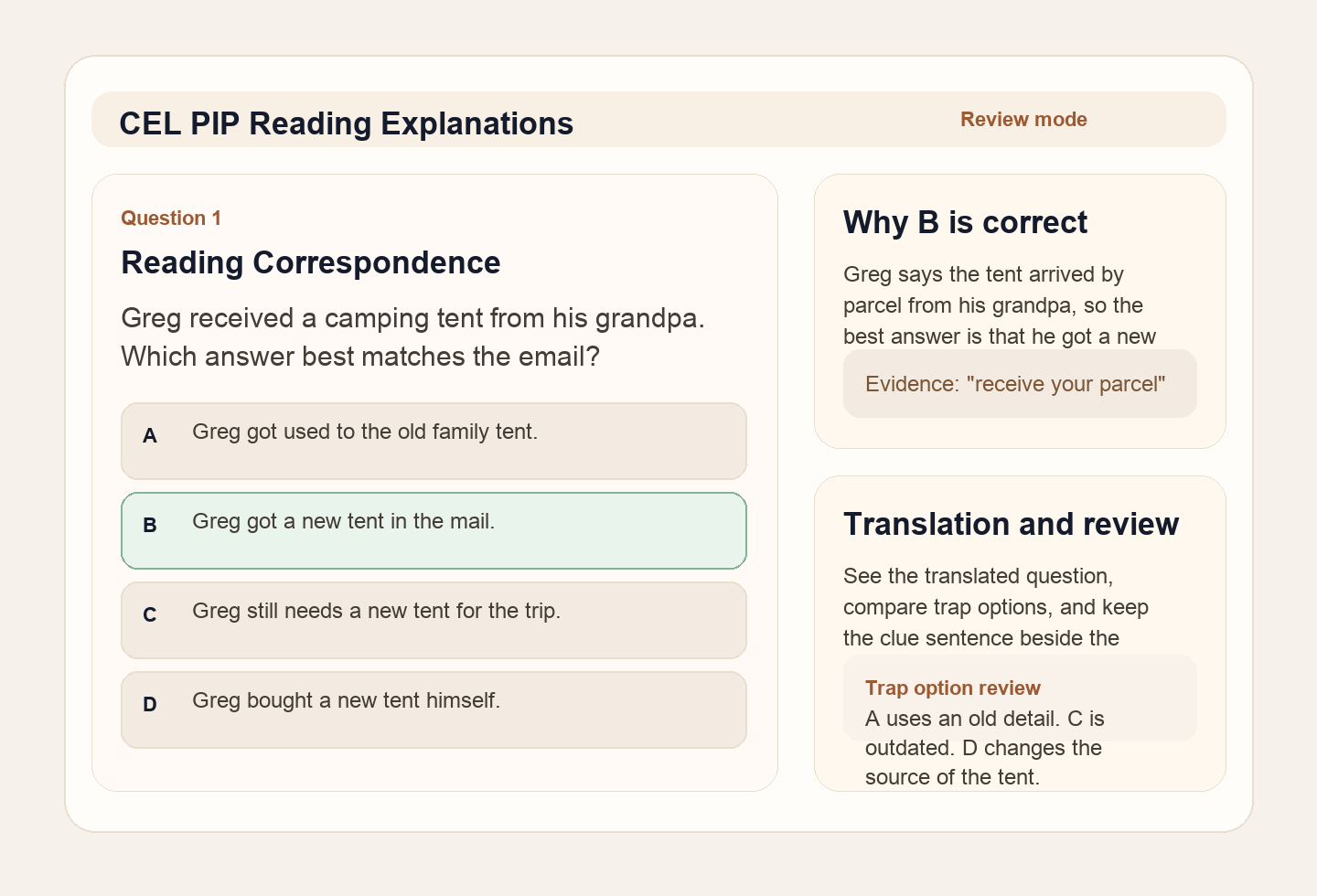
Strategy modes
The exact clue source changes, but the logic stays stable: understand the question, eliminate wrong options, then compare the final two with precision.
Trap answers
The option repeats one correct detail but ignores the part of the sentence that actually changes the answer.
The option flips cause and effect, problem and solution, or speaker intention and final action.
The answer uses a correct event, but places it before, after, or instead of the key moment the question cares about.
The option echoes vocabulary from the passage or audio but does not preserve the actual meaning.
Speed rules
One job of strategy is deciding which options do not deserve a second look.
After a miss, record whether it was a partial match, reversed logic, wrong timeline, or keyword bait.
FAQ
Yes at the logic level, even though listening and reading give you clues in different ways.
A near match that repeats a familiar word but ignores the condition, contrast, or final decision.
Yes, but not at the same depth. Eliminate obvious misses fast, then compare the final candidates more carefully.
Next move
The goal is not to memorize rules forever. It is to reduce the next wrong answer you would otherwise repeat.