The question and all options
You need the full decision context on one screen, not a floating answer key. That means the stem, the four options, and the selected answer should stay visible while you review.
 CEL PIP
CELPIP Practice
CEL PIP
CELPIP Practice
celpip reading explanations
Strong CELPIP reading explanations do more than reveal the correct letter. They show the evidence, explain why the trap options fail, and turn each miss into a repeatable reading pattern. If you are looking for CELPIP reading answers explanation or reading practice explanations, this is the workflow to use.
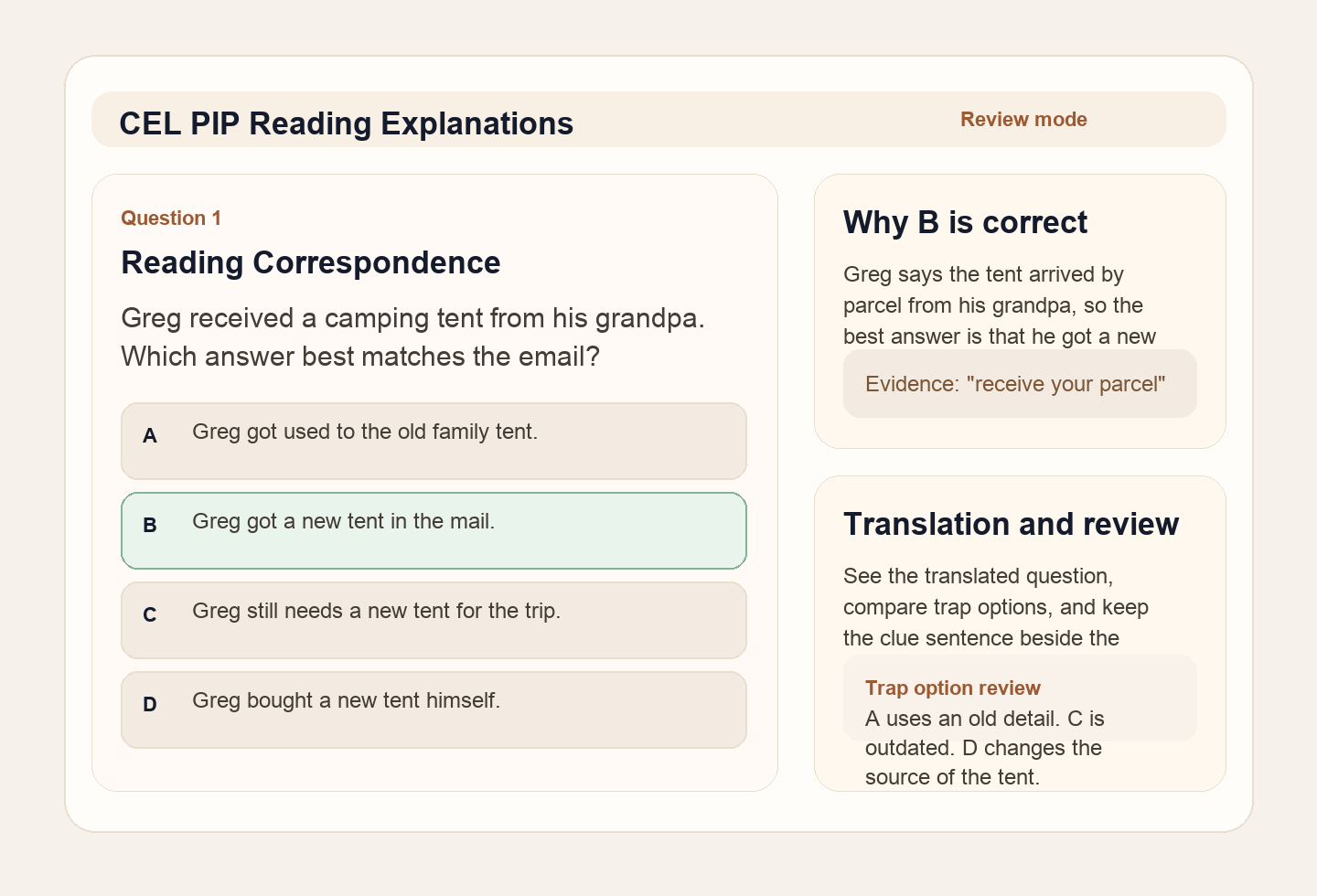
Explanation page
You need the full decision context on one screen, not a floating answer key. That means the stem, the four options, and the selected answer should stay visible while you review.
The strongest reading explanations point to the line that proves the answer instead of asking you to trust a general summary.
Wrong answers often echo a real word from the passage but twist the logic. A useful review screen explains that mismatch directly.
If the page also supports wrong-answer review, you can return to the same question type after a few days and see whether the pattern is still causing misses.
Translation and review
Read the question in English first. If a detail is still unclear, use the translated version to confirm the relationship between the people, time, or action before checking the answer explanation.
When you revisit missed questions later, you stop memorizing answer letters and start recognizing common CELPIP traps such as partial matches, outdated details, and cause-effect reversals.
Sample screenshot
You can inspect the question, the answer evidence, and the trap-option review flow before committing to a longer study session.
Note whether the error came from a partial match, outdated detail, or a cause-effect reversal so the next set is easier to review.
Best fit
Explanation pages slow the decision down and reveal which word or phrase changed the answer.
If you often pick the almost-right option, explanation review is where you separate clue from distraction.
Translation support helps confirm meaning without replacing the English-first reading habit you need on test day.
Reading explanations become much more useful when they are tied to a wrong-answer log and spaced revisits.
FAQ
A useful explanation should show the clue sentence, why the correct option fits, and why the trap options fail.
Use translation only after making your first choice in English. It should confirm meaning, not replace the original reading step.
Yes. You can go directly into a reading section and use the explanation flow after you answer.
Start reading practice
Start with a free reading set and use answer explanations to turn each miss into a specific review target.